Three Studies for Figures at the Base of a Crucifixion
Three bodies bent out of human shape and held in shallow orange boxes: distortion and confinement doing the same work.
Three Studies for Figures at the Base of a Crucifixion, 1944. Oil paint on 3 boards, each 940 x 737 mm. Tate, presented by Eric Hall 1953.
PHOTOGRAPH Tate / tate.org.ukReferenced from its source. Rights not established by SIMULACRA.
Plates 3
Overview
A triptych of three pale, part-human creatures, each alone on a flat orange ground. One crouches on a table under drapery, one stands on a pedestal with its mouth bandaged, one stretches its neck out over a patch of grass and opens a mouth full of teeth. Each panel is 940 by 737 mm.
Bacon named it after the mourners at the foot of the Cross in Christian painting. In 1959 he told the Tate the figures were sketches for the Eumenides, the Furies of Greek myth, which he meant to place at the base of a large Crucifixion. Tate holds it, presented by Eric Hall in 1953.
What to notice
- Space drawn, not paintedThe rooms are a few black lines on the orange. Tate's catalogue notes that the space comes from that drawing, not from light and shade, so each figure sits in a box that is barely there and still holds it.
- The bandaged mouthThe centre figure has no face beyond a white wrapping and a row of teeth. It turns that mouth straight at you, the only direct address in the triptych.
- Hair in loose pastelThe chestnut hair of the left figure is chalk pastel with no fixative, set against heavy, cracked oil. It is the softest mark in the picture and it sits on the most hunched body.
- Green inside the mouthIn the right panel the open jaw has a rich green in its recesses, the one cool colour in a field of orange, grey and black.
- The orange is not flatUp close the ground is several close oranges brushed over each other on absorbent board, and parts of the left panel have darkened towards brown.
Historical context
Bacon first showed the triptych at the Lefevre Gallery in London in April 1945, near the end of the Second World War. Tate's label notes that for some viewers it reflects the horror of the war and the Holocaust. Critics have followed Bacon's lead in treating it as the start of his mature work, with his paintings of the 1930s as a pre-history.
The boards are cheap Sundeala board, unprimed, and the panels show long revision over earlier images. In 1988 Bacon painted Second Version of Triptych 1944 on larger canvases with a deep burgundy ground. It is also at Tate.
Connections
Shared context
- Body without Organs, Gilles Deleuze + Félix Guattari
Deleuze wrote a book-length study of Bacon's paintings in which he develops the body without organs, and Tate's catalogue entry quotes him on the zone between man and animal in these figures. The concept was not made for this painting, but this painting is one of the places Deleuze tested it.
Formal resemblance
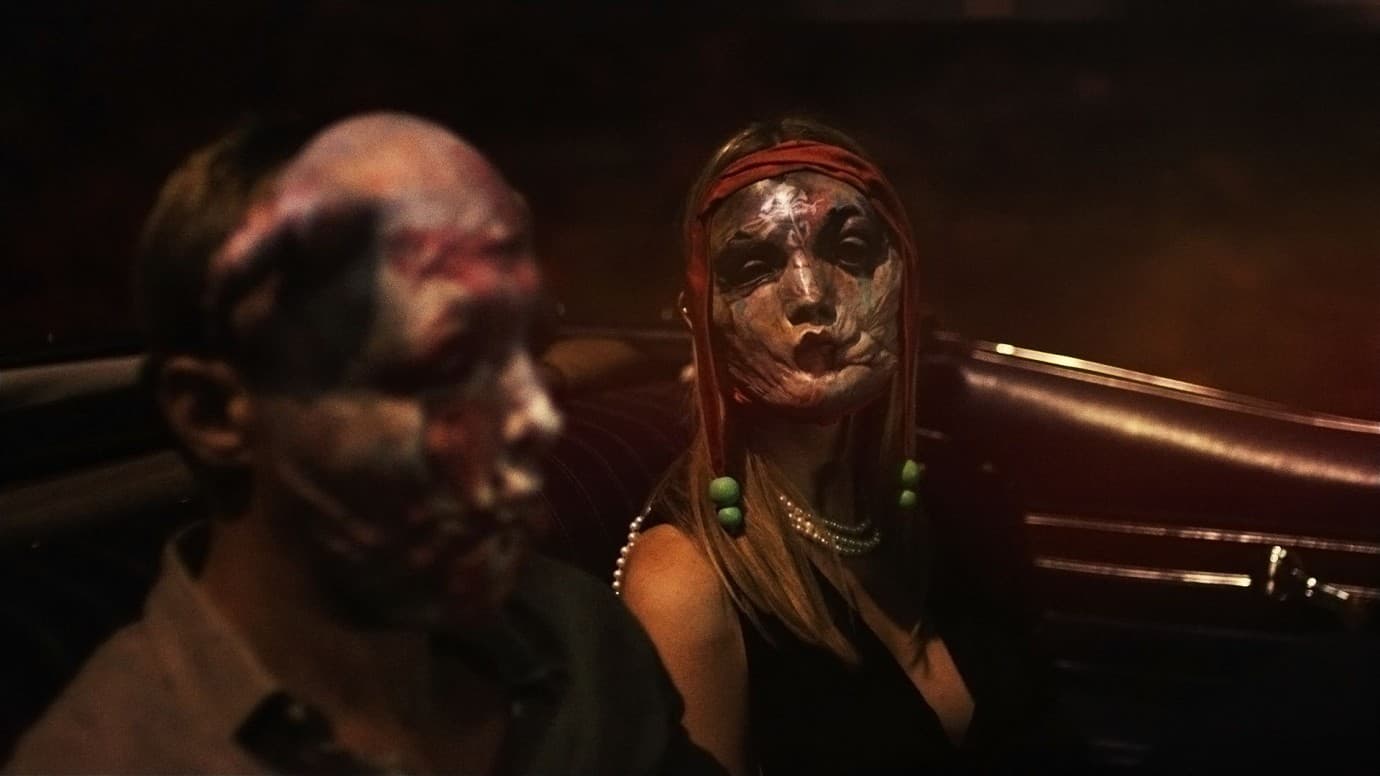
- Crimes of the Future, David Cronenberg
Both put a reworked body on display, propped on furniture and offered to an audience. No source links Cronenberg's film to this painting.
- The Substance, Coralie Fargeat
Both stage a body pushed out of its own shape inside a controlled, saturated space. The resemblance is formal only.
Sources and further exploration
- tate.org.uk
- Three Studies for Figures at the Base of a Crucifixion
Display caption and full catalogue entry by Matthew Gale, November 1998.
- Second Version of Triptych 1944
Bacon's 1988 reworking of the composition.
- Francis Bacon: The Logic of Sensation
Deleuze's book on Bacon's paintings, first published in French in 1981.