Interview with the Vampire
A vampire tells his life story to the same journalist a second time, in rooms designed to make you doubt the telling.
Season 2. Jacob Anderson as Louis and Delainey Hayles as Claudia.
PHOTOGRAPH Photograph: Larry Horricks / AMC, as published by Variety / variety.comReferenced from its source. Rights not established by SIMULACRA.
Plates 3
Overview
Rolin Jones's adaptation of Anne Rice's 1976 novel for AMC. In the present, Louis de Pointe du Lac (Jacob Anderson) asks the journalist Daniel Molloy (Eric Bogosian) to his apartment in Dubai to record his story again, decades after a first interview that never came together. The flashbacks move Rice's dates forward. Season 1 is New Orleans from the 1910s, with Lestat (Sam Reid). Season 2 is Paris after the Second World War and the Théâtre des Vampires.
The frame matters as much as the story. Louis tells, and Molloy pushes back on what he remembers.
Credits
What to notice
- Season 1: a house that turnsLePere-Schloop wanted the townhouse to change on a dime, like Lestat: seductive in one scene, threatening and lost in shadow the next, mostly through lighting. Shifts in colour temperature mark the decades passing inside it.
- Season 1: Dubai as a caveLouis's penthouse is surrounded by sand and sunlight, but the dining room where he first faces Molloy has no windows. The designer wanted it to feel like the belly of a whale. The walls carry Basquiat, Bacon and a Vivian Maier photograph.
- Season 1: the servant
Contains a spoiler. Show it
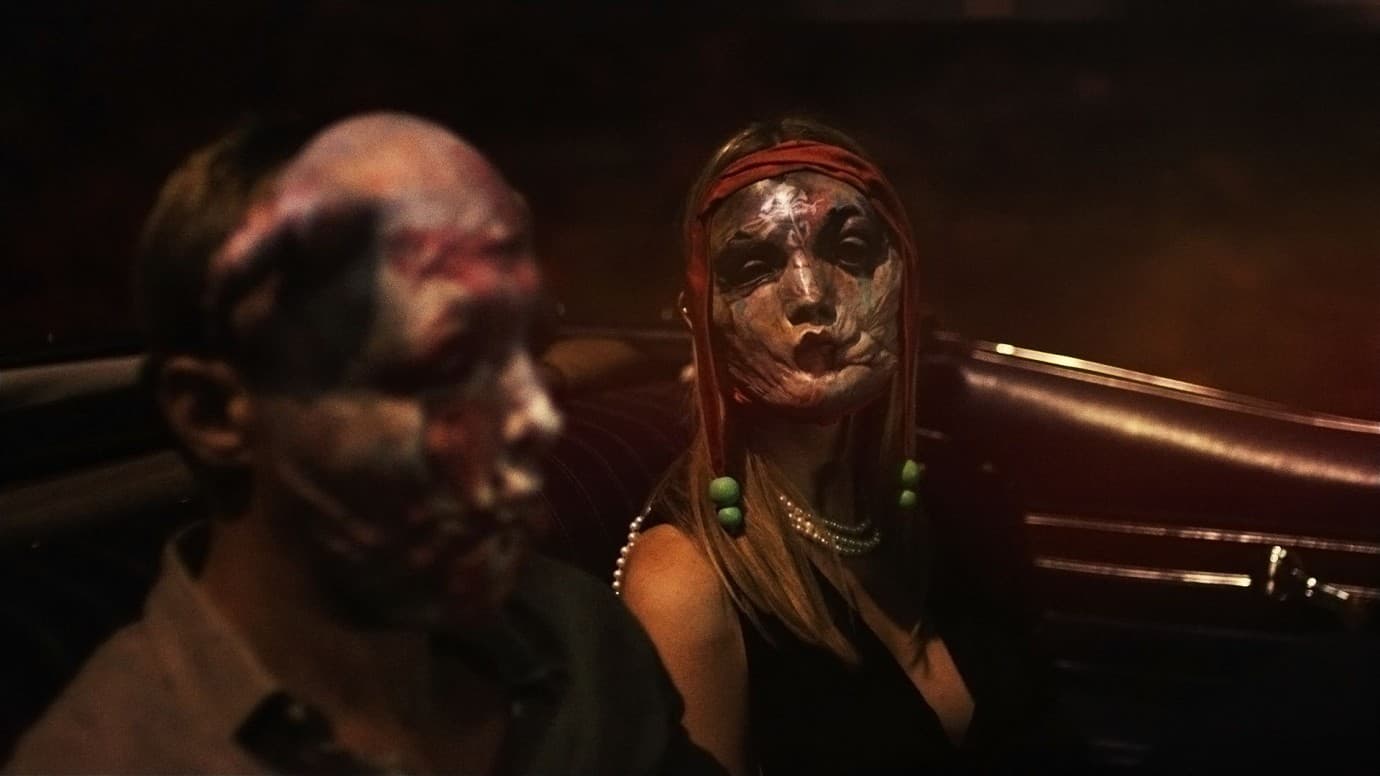
The servant in the Dubai apartment is Armand, a vampire and Louis's companion, in disguise. Rewatch the interview scenes knowing who was listening to every answer. - Season 2: projections gain colourThe coven's shows use projected animation made with the London theatre company 1927. The projections start monochrome and colour bleeds in as Louis and Claudia fall under the coven's spell.
- Season 2: stolen statuesTwo shrouded wooden figures flank the stage, carved by Prague artisans, as if looted from a church. One holds a skull, the other holds a baby by its leg.
Historical context
Season 1 was shot in New Orleans on built sets and at historic sites. Production designer Mara LePere-Schloop, a New Orleans resident, rebuilt Storyville on a backlot, because the district no longer exists and only a few photographs of its streets survive. The exterior of Lestat and Louis's townhouse is Gallier House on Royal Street, a house Rice visited for inspiration. Jesse M. Feldman and David Tattersall shot alternating episodes, and Feldman was nominated for an ASC Award for the episode Is My Very Nature That of the Devil. Daniel Hart composed the score.
Season 2 moved to Prague. LePere-Schloop found the Théâtre des Vampires in an old factory with raw brick and multi-level platforms, and set designer Hélène Maroutian bought period theatre pieces in France for it.
Connections
Formal resemblance
- Severance, Dan Erickson
Both are built on recollections that another party can edit or withhold, framed by severe controlled interiors. Resemblance only.
- Infinity Pool, Brandon Cronenberg
Expensive, calm interiors hide predation in both: a Dubai penthouse here, a resort there. No source links them.
- Crimes of the Future, David Cronenberg
The Théâtre des Vampires turns real killing into a show for paying spectators, as Crimes of the Future turns surgery into performance. Resemblance only.
Sources and further exploration
- variety.com
- Interview With The Vampire Q&A: Production Designer Mara LePere-Schloop on bringing Storyville to life
Season 1.
- How Interview With the Vampire Created the Théâtre des Vampires
Hunter Ingram, 26 May 2024. Season 2.
- Interview with the Vampire (Original Television Series Soundtrack)
Daniel Hart, Season 1 score.