Tri Repetae
Ten long tracks built from repeating machine rhythm and shifting texture, with the melody pushed back and the pattern brought forward.
Tri Repetae, cover of the 2016 vinyl reissue.
PHOTOGRAPH The Designers Republic / autechre.bandcamp.comReferenced from its source. Rights not established by SIMULACRA.
Plates 2
Overview
The third album by Autechre, the duo of Sean Booth and Rob Brown, released by Warp in November 1995. It has ten tracks, seven of them longer than six minutes, with one-word titles that are not quite words.
The sleeve is a single flat colour with a small black label block. The album's own notes, as later writers have quoted them, favour hearing it with surface noise, which places the sound of the playback medium inside the work.
Credits
What to notice
- Length as materialStud runs 9:40 and Rsdio 10:08. On a record this long, the change inside a repeating pattern is the event, so give each track its full length.
- The sleeve says almost nothingOne colour across the whole square and a small label block in the corner. It is the same reduction the tracks use: one field, small exact information.
- Surface noiseThe liner notes speak well of surface noise. Played on vinyl, the crackle of the record sits under the machine rhythm and becomes part of the texture.
- Titles without meaningDael, Clipper, Leterel, Rotar, Gnit. The names read like part numbers or misheard words, which keeps you listening to the structure instead of a story.
Historical context
The packaging is credited to The Designers Republic, with Chris Cunningham and Russell Haswell also credited for design on the original UK CD.
Writing thirty years on in The Quietus, Gary Suarez notes the drab monochrome packaging and the liner notes' favourable mention of surface noise. The curatorial angle here, rhythm, repetition and machinery, is a proposed reading, not a claim about the duo's intentions.
Connections
Formal resemblance
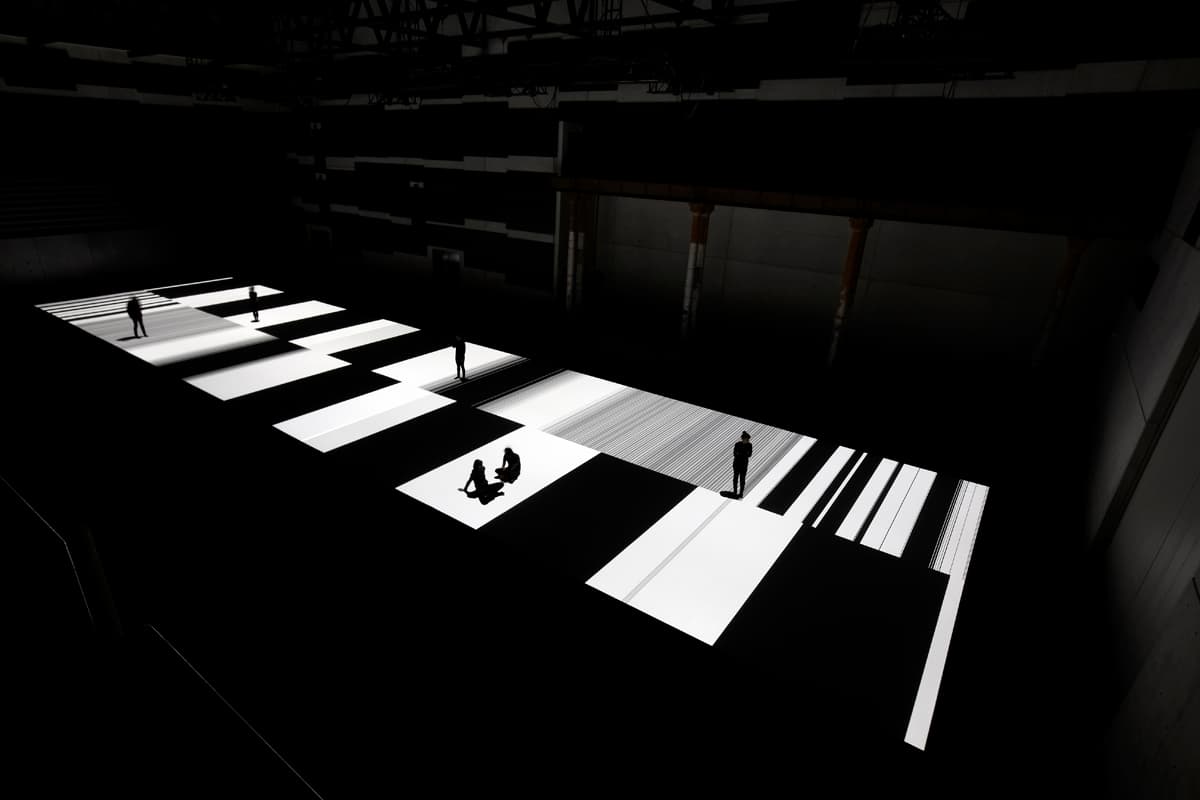
- Ryoji Ikeda, Ryoji Ikeda
Both make the machine audible instead of hiding it. Ikeda reduces to tone and pulse; Autechre keeps rhythm and texture but strips back melody. A likeness of method, not a documented link.
- Untitled concrete works, Donald Judd
A unit repeated until small differences become the subject. Judd does it with boxes in a row; here it happens in time, one bar after another.
- Einstürzende Neubauten, Einstürzende Neubauten
Neubauten strike real metal; Autechre build machine rhythm inside the studio. Two ends of the archive's industrial axis, physical and synthetic.
Sources and further exploration
- autechre.bandcamp.com
- Tri Repetae, by Autechre
Official listening page. Tracklist: 1. Dael (6:39); 2. Clipper (8:34); 3. Leterel (7:08); 4. Rotar (8:04); 5. Stud (9:40); 6. Eutow (4:15); 7. C/Pach (4:39); 8. Gnit (5:49); 9. Overand (7:33); 10. Rsdio (10:08).
- Autechre: Tri Repetae
Label release page.
- 30 Years On: Autechre's Tri Repetae Revisited
Anniversary essay, first published 2015 and republished 2025.